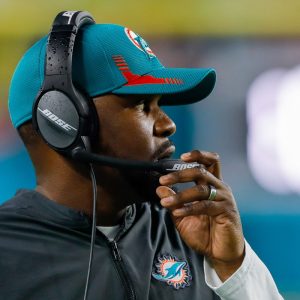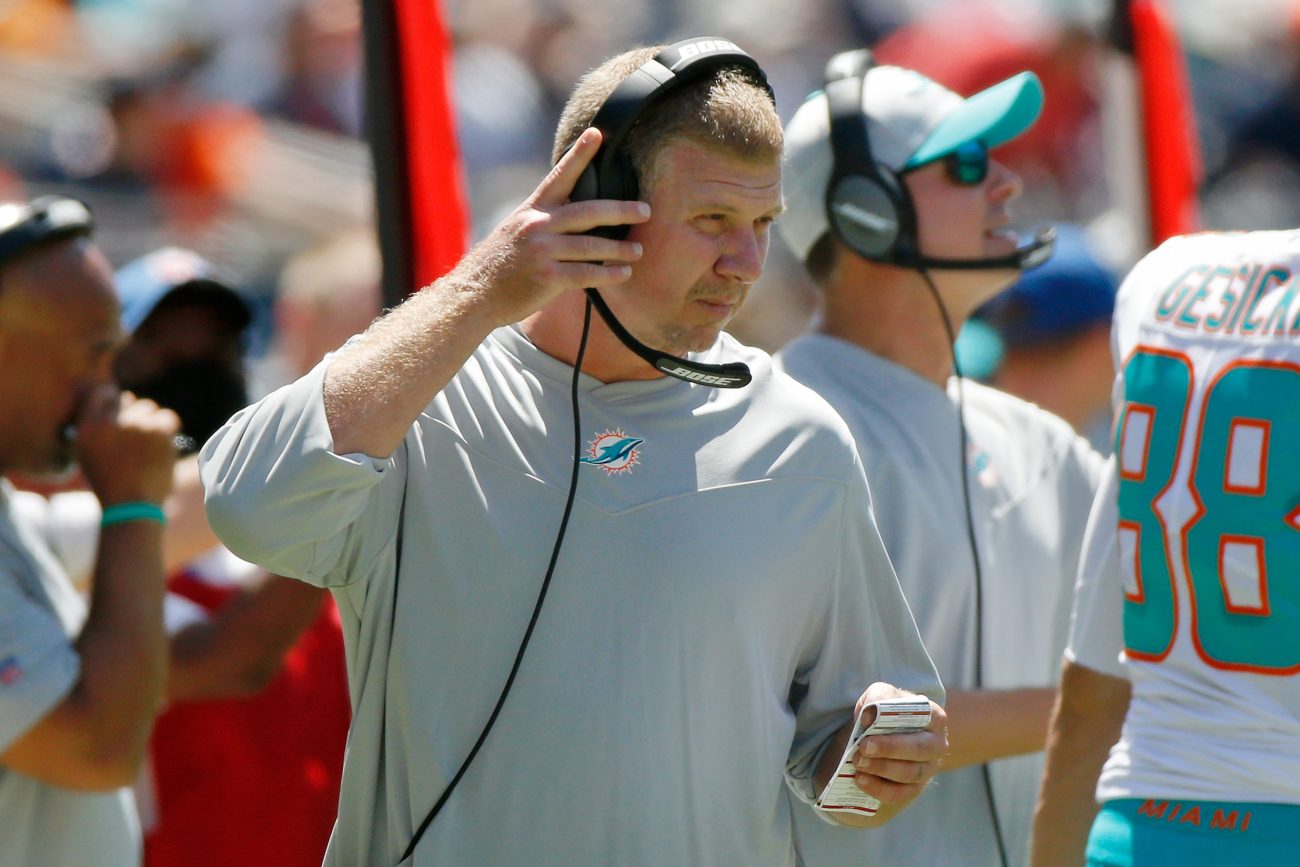



Jeff Hafley is willing to reconsider the Miami Dolphins’ defensive scheme as he searches for a way to generate pressure before Sunday’s game against the Kansas City Chiefs.
Speaking Wednesday, the Dolphins coach said the options extend from moving players to adjusting the system itself. Among the possibilities he raised was “maybe totally changing the scheme in order to generate pressure.”
Hafley also placed responsibility for finding a solution on himself.
“That’s the job of a coach and that’s my job to do,” he said.
The comments did not announce a new defense or identify a specific change for Kansas City. They did establish that Hafley is evaluating the approach alongside the personnel after an opening stretch without a sack.
Miami had already opened discussions about potential lineup changes Monday. Wednesday’s answer gives the defensive side of that review a sharper focus: whether the calls and assignments are putting the available players in positions to disrupt the quarterback.
Dolphins’ pressure numbers explain why the scheme is under review
Through the first two weeks of the 2026 season, Miami’s pressure rate was 24.6 percent, ranking 31st. Its blitz rate was 28.6 percent, ranking 14th. Miami was also the only team without a sack through that span.
Those figures describe a defense getting little pressure despite a blitz frequency near the middle of the league. They do not identify which player or call is responsible, but they help explain why simply asking for more aggression is an incomplete answer.
A pressure call has to accomplish something before the quarterback exploits the space behind it. Changing the timing or origin of a rush might produce a different blocking matchup; sending another defender also creates a coverage responsibility that somebody must handle.
The benefit depends on the execution of both parts. San Francisco provided a specific example of that trade-off Sunday.
On the first offensive snap of the third quarter, Brock Purdy connected with George Kittle for a 40-yard gain. Kyle Shanahan explained that Miami sent both cornerbacks on a blitz, opening an opportunity through the middle for Kittle.
The possession ended with Kittle catching a 12-yard touchdown pass. That play gives the broader pressure discussion a concrete reference point.
Miami committed defensive backs to the rush, yet San Francisco produced an explosive gain through the area the call exposed. It illustrates why the result matters more than the number of rushers sent.
Purdy finished with 287 passing yards and two touchdown passes on 20 completions in 22 attempts. Any improvement against the Chiefs will need to show up in the difficulty of the throws Miami allows, as well as its sack total.
Chop Robinson’s progress could change Miami’s options
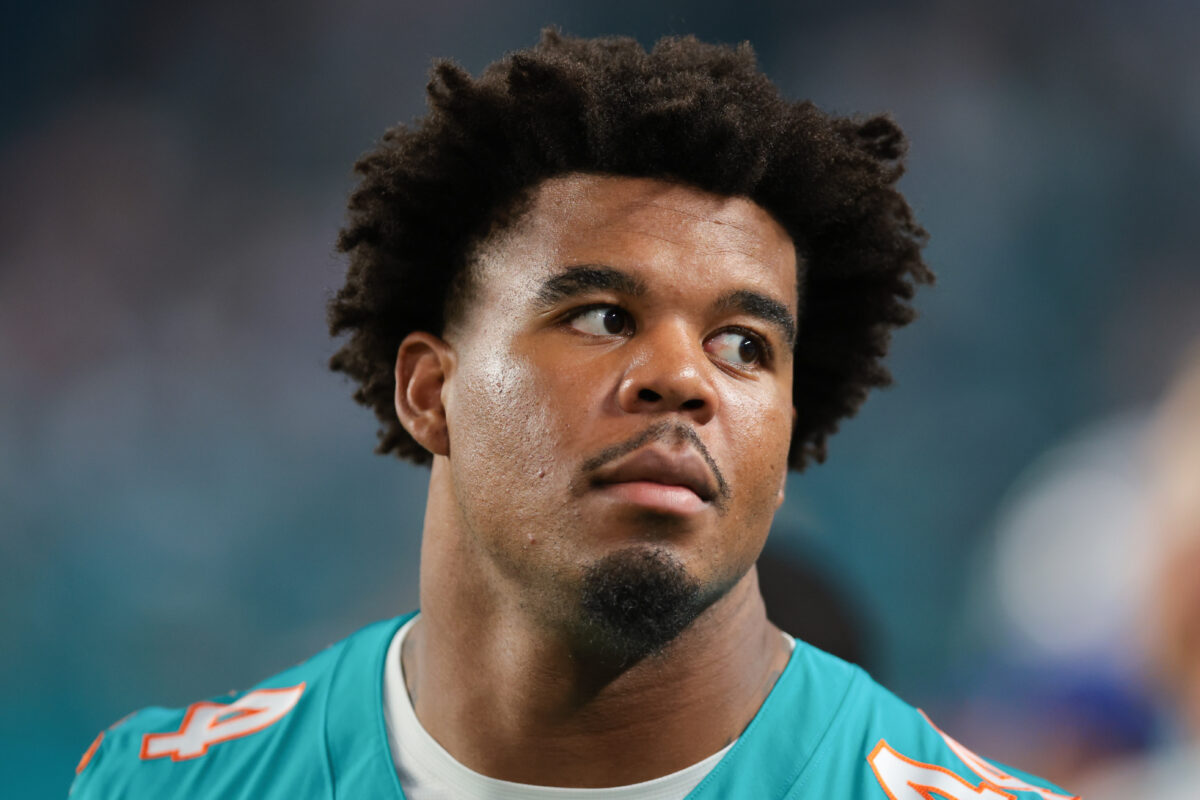
The Dolphins received an encouraging personnel update Wednesday when Chop Robinson was listed as a full participant on the official injury report. He had missed the San Francisco game following a practice concussion.
The same Wednesday report listed fellow edge defender Robert Beal Jr. as a nonparticipant with a hamstring injury. Kansas City tackle Josh Simmons also did not practice because of a back injury.
Those are practice updates, and they leave the final matchup unsettled. Robinson’s participation does not by itself confirm that he will play Sunday, just as Simmons’ absence does not establish that Kansas City will need a replacement.
If Robinson is available, Hafley would have another option when deciding how to distribute the work on the edge. That matters to the scheme discussion because a coach can change a player’s assignment without changing the entire defense, or change a pressure call while retaining the same personnel.
The practical question is which combination can make the quarterback move, hurry a throw or hold the ball long enough for the rush to arrive. A returning player can expand those choices, but his availability alone cannot settle the issues illustrated by the Kittle completion.
Hafley has a Packers example, but Miami faces a different test
Hafley referenced his first season coordinating Green Bay’s defense when discussing the need to adapt. The Packers offer a relevant example of how quickly production can change, though the circumstances deserve to stay attached to it.
On Sept. 22, 2024, Green Bay recorded eight sacks in a 30-14 win over the Tennessee Titans. Devonte Wyatt and Preston Smith each had two, while Kingsley Enagbare contributed 1.5.
Malik Willis started at quarterback for Green Bay in that game. The production came from multiple defenders, an important detail when considering what a successful adjustment might look like.
Miami needs ways to create favorable opportunities across its front, rather than a plan that depends on one player rescuing every passing situation. Still, the Packers’ result came against Will Levis and Tennessee’s offense two seasons ago.
It is background for Hafley’s experience, not evidence that a comparable performance is coming against Patrick Mahomes. Different personnel and a different opponent make the comparison useful only to a point.
For Miami, Sunday’s progress can be judged in more immediate terms: whether pressure forces an early decision, whether the coverage survives when extra rushers come and whether a disrupted play actually ends with the offense behind the chains.
A first sack would end the drought, but consistent disruption would mean more for a defense trying to get off the field. The Dolphins host Kansas City on Sept. 27 at 1 p.m. EST at Hard Rock Stadium.
Hafley has left himself room to adjust the plan; the next test is whether those adjustments make the opposing quarterback’s job harder.