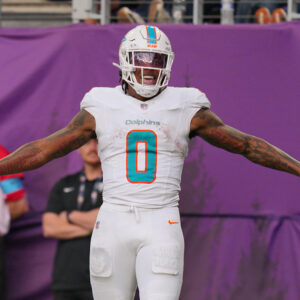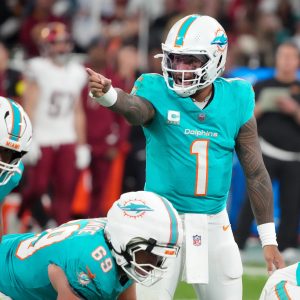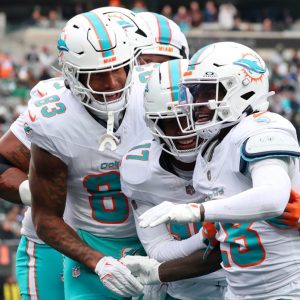

Tyreek Hill picked the eve of NFL training camps to remind everyone he still exists — and, unintentionally, to show everyone why he’s still unemployed.
The former Miami Dolphins star posted a rehab video Wednesday night captioned “10 months later… God is Good,” showing him sprinting on turf, jumping on a basketball court and working through pool exercises at his South Florida home. But the words inside the video carried more weight than the workout.
10 months later… God is Good. 🐆 pic.twitter.com/nTqgoQu4s9
— Ty Hill (@cheetah) July 23, 2026
“My left leg is the one that I injured. I have no power in my left leg at all, so I’m trying to regain all the power back in my left leg,” Hill said in the clip, adding that the process is coming one day at a time.
ESPN’s Adam Schefter amplified the admission Thursday morning, and within hours it was the story of the NFL’s report week. For most of the league, it’s a status update on a famous free agent.
For Dolphins fans, it’s something heavier: the clearest evidence yet that the most painful decision of Miami’s rebuild was also the right one.
What Hill Said — and What the Video Showed
The video itself is classic Hill — defiant, spiritual and produced for maximum audience. He runs. He jumps. He notes that he wasn’t even supposed to be sprinting yet.
He recalls that doctors initially warned him they couldn’t promise he would walk normally again, let alone play, and frames the footage as proof he’s beaten those odds.
What he would not do is name a return date. Hill declined to share any timeline while insisting the trajectory looks good — a formulation that says everything. A receiver whose entire game is built on burst, ten months removed from surgery, telling the world his surgically repaired leg still can’t generate power, is not a player weeks away from a workout tour.
That squares with what his agent, Drew Rosenhaus, indicated last month: The plan is to get Hill back into football shape first and worry about a destination afterward.
The Injury That Ended the Cheetah Era in Miami
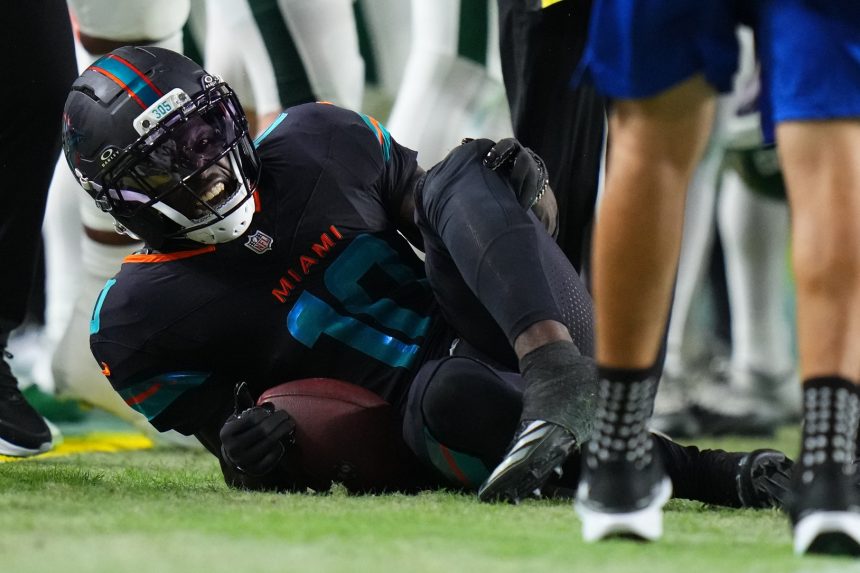
The origin point remains one of the ugliest moments at Hard Rock Stadium in years. Hill dislocated his knee and tore multiple ligaments, including his ACL, in the Week 4 game against the New York Jets on Sept. 29, spent the night in the hospital and had surgery the following day.
A second operation followed. His season was over after four games, and it turned out his Dolphins career was too.
Miami released him in February rather than carry his contract into a full-scale rebuild, a move that was widely described as cost-cutting but was really a bet: that a 32-year-old speed receiver coming off a catastrophic leg injury was not going to be part of the next good Dolphins team.
At the time, that bet was debatable. Fans could squint and see the greatest deep threat of his generation rehabbing his way back to form while Miami’s young receivers developed around him.
Wednesday’s video is the update on that bet. 10 months out, the power isn’t back. Training camps open this week, 90-man rosters are set and Hill isn’t on any of them.
Why This Lands Differently in South Florida
The Dolphins didn’t just move on from Hill — they rebuilt the entire position in his absence.
Jaylen Waddle is gone too, and the receiver room first-year head coach Jeff Hafley inherits is a collection of veterans on prove-it deals and Day 2 rookies: Malik Washington, Jalen Tolbert and Tutu Atwell up top, with draft picks Caleb Douglas, Chris Bell and Kevin Coleman Jr. fighting for roles behind them.
That construction answers the reunion question before anyone asks it. A rebuilding team stripping its roster down to find out about young players has no use for a 32-year-old receiver who can’t practice, and Hill’s own video confirms he couldn’t help anyone in September anyway.
The romantic version of this story — the Cheetah healing up and coming home — was never realistic, and it’s now officially dead on both ends. There’s also a quieter vindication here for a front office that took real criticism in February. General manager Jon-Eric Sullivan chose draft capital and cap flexibility over sentiment, and every month Hill spends unsigned makes that call look more clinical and less cold.
The Dolphins open camp this week with their own questions — plenty of them, including two cornerbacks already on the PUP list — but a $20-million-plus receiver rehabbing on the books is not one of them.
What Comes Next for Hill
None of this means Hill’s career is over. He was among the sport’s most productive receivers before the injury, an eight-time Pro Bowl selection, and he has been consistent that he intends to play again.
The video’s existence is itself a message: With camps opening and receiver-needy contenders taking inventory, Hill is marketing his recovery in real time.
The realistic path looks like an in-season signing. A team that loses a receiver in August or sits on the fringe of contention in October could take a low-cost flier once Hill proves the explosion is back — and he said in the video that regaining his first step is the specific goal, so that nothing feels missing when he returns to a field.
Until a workout shows it, though, teams will treat the tape the way Dolphins fans should: as an inspiring video about a player who is not close yet. That’s the strange duality of Wednesday night’s post.
As a comeback chronicle, it’s genuinely moving — a player told he might not walk normally again is sprinting in his backyard. As a football document, it’s sobering. The power isn’t there, the timeline doesn’t exist and the team that knew him best planned for exactly this outcome five months ago.