

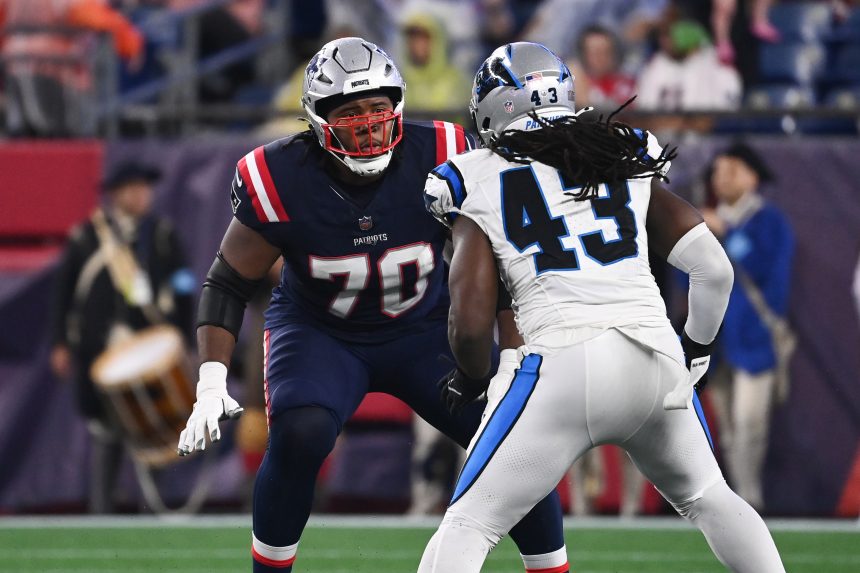
The Miami Dolphins ended Monday with a new offensive tackle, one fewer kicker on the roster and a depth chart that looks meaningfully different than it did at sunrise. The headline move was a trade with New England that sends tackle Caedan Wallace and a 2029 seventh-round pick to Miami in exchange for a 2028 sixth-round selection, a deal the Patriots made official Monday afternoon.
The trade arrived alongside a separate set of roster moves in which the Dolphins signed cornerback Nick McCloud and placed kicker Zane Gonzalez on injured reserve, transactions the team announced Monday. Taken together, the day amounted to the most active 24 hours of roster management in Jeff Hafley’s first training camp, and it landed two days before the team boards a plane for the most important week of its preseason.
Why Miami traded instead of waiting on waivers
The Wallace acquisition did not start as a trade. Earlier Monday, NFL insider Jordan Schultz reported that New England intended to waive the third-year lineman, which would have exposed him to claims from all 32 teams in waiver-priority order. By late afternoon, the release had become a trade instead — and the structure of the deal explains why Miami didn’t simply wait its turn.
The Miami Herald’s Omar Kelly framed the swap plainly.
“Hopefully there are conditions put on that swap of a sixth and seventh round pick. But this is mainly to skirt the waiver wire,” Kelly wrote.
The math backs the read: Miami effectively moved down one round in a late-round pick exchange two years apart, and in return it guaranteed itself a player who otherwise might never have reached its waiver slot. For a front office that has now made two trades with New England since the spring, the price of certainty was a rounding error.
What the Dolphins are getting in Caedan Wallace
Wallace, 26, was a third-round pick out of Penn State in 2024, taken 68th overall by a New England regime that has since turned over. The 6-foot-5, 320-pound lineman has appeared in 10 games with two starts across two seasons, both starts coming as a rookie at left tackle.
Injuries have shaped his career arc more than performance has — he spent most of his rookie year on injured reserve and was limited to a handful of snaps in 2025, bouncing between tackle, guard and even a tackle-eligible role without ever settling into one job.
That resume is exactly why the skepticism arrived as fast as the trade did. Alain Poupart cautioned fans against assuming a bargain, noting that the more useful question is why New England was willing to move on from a recent draft pick whose signing bonus was already paid and who was earning close to the minimum.
The counterargument is that Miami wasn’t shopping for a finished product. It was shopping for exactly what Kelly had identified hours earlier from the practice field, when he listed a better backup offensive tackle among the roster’s remaining needs alongside nickel, safety and tight end depth.
The tackle spot behind the starters has been a live concern since the first padded practice of camp, when Austin Jackson’s early exit exposed how thin the right tackle picture gets — and a 26-year-old former third-round pick on a minimum-level deal is about the cheapest possible swing at that problem.
Kicker competition ends with Gonzalez on injured reserve
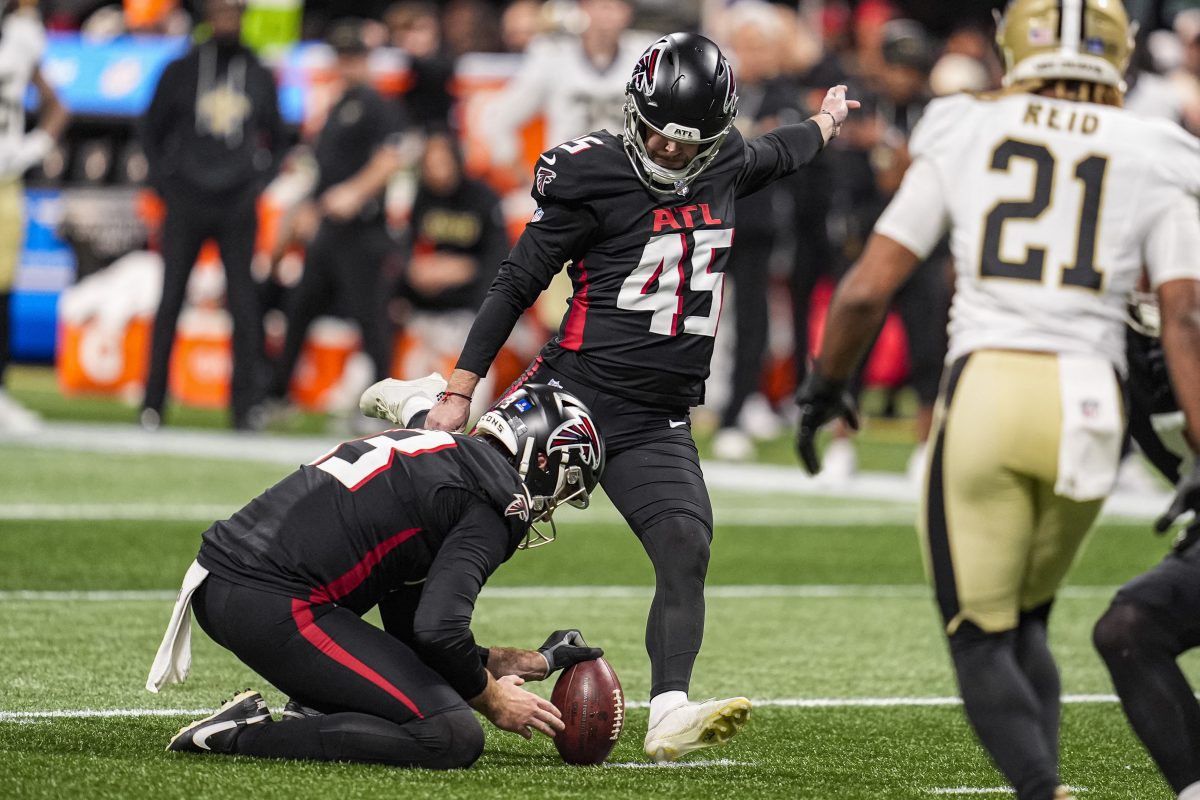
The quieter half of Monday’s news settled the only true position battle on special teams. Gonzalez, who left Saturday’s practice with an injury, was described by Hafley as week to week on Monday morning — and by evening the Dolphins had placed him on injured reserve, ending his camp and handing the job to Riley Patterson.
Gonzalez signed with Miami in March as an eight-year veteran with a career field goal conversion rate of 81.0 percent, brought in to push Patterson after the incumbent finished last season as the injury replacement for Jason Sanders.
The competition never produced much separation before it ended by attrition. Patterson, who re-signed in March, now enters the preseason without a challenger on the roster.
The injury list driving the urgency
Monday’s moves make more sense against the backdrop of a practice that kept sending players off the field. Zach Sieler was absent from the workout entirely, appearing only in sweats, with no explanation offered.
Josh Uche spent team periods running sprints on the side, Willie Gay Jr. walked off with a trainer after grabbing at his back during an individual drill, and Lonnie Johnson Jr. sat out team periods after briefly returning.
The more defined timelines are not encouraging either. Hafley said edge rusher Clelin Ferrell will be out for “weeks,” while cornerback JuJu Brents is not expected to work this week — context that makes the McCloud signing read less like a depth luxury and more like a necessity.
For a team that has already churned the bottom of its roster repeatedly this month, including waiving quarterback Mark Gronowski just three days ago, Monday confirmed that the churn is accelerating rather than slowing down.
Commanders week raises the stakes
All of it feeds into a week that will tell Dolphins fans more than the first 10 practices combined. The team travels to the Washington area for a Wednesday joint practice with the Commanders, followed by Friday’s preseason opener — and both sessions will feature live tackling.
Hafley has already indicated that how much his starters play Friday will depend on how many reps they log Wednesday and how they come out of it physically. That makes the joint practice the real proving ground, and it makes Monday’s additions immediately relevant rather than theoretical.
Wallace will have roughly 48 hours to absorb enough of the playbook to take live reps against a Washington front, while Patterson gets his first full week of work as the unchallenged kicker. For a roster that just landed dead last in a national power ranking, the week ahead is the first chance to push back against the league’s assumptions — and the front office spent Monday making sure it arrives with as few open holes as it can manage.